
One of the most searched questions in interior design is also one of the most poorly answered. What does it actually cost? The responses online tend to be either so vague they are useless or so disconnected from real market conditions that they lead homeowners to budget in a way that sets the project up for frustration before it even begins.
This post gives you something more useful. A clear, honest look at how design costs are structured, what the numbers actually look like for different types of projects in the Birmingham market, and, perhaps most importantly, the budgets that almost every homeowner forgets to plan for until it is too late.
Why Interior Design Costs Are Hard to Pin Down
The range you will find when you search this question is enormous, and that is not because designers are being evasive. It is because interior design is not a single, standardized service. The cost of a focused single-room furnishing project is fundamentally different from the cost of a whole-home renovation with full project management. Treating them as comparable is like asking what a car costs without specifying whether you are buying a sedan or a truck.
Several factors drive the variation. The scope and number of rooms involved. Whether the project includes construction or renovation work. The level of designer involvement required. The caliber of materials and furnishings being specified. And the market you are in, since Birmingham costs are meaningfully different from what you will see quoted for New York or Los Angeles.
Understanding what drives costs is more useful than looking for a single number, because it lets you evaluate your own project realistically rather than measuring against someone else’s.
The Three Budgets Every Project Needs
This is the part of the conversation most homeowners have not had before they start, and it is the single biggest source of project stall-outs and unfinished spaces in the Birmingham market.
Most people think about their renovation or design project as having one budget. In reality there are three, and each one needs to be planned for separately from the very beginning.
Budget 1: The Design Service Fee
The design service fee covers the designer’s time, expertise, and all of the professional work involved in your project, concept development, material and finish selections, space planning, procurement management, contractor coordination, and installation oversight.
In my practice full-service design is structured as a flat design fee, which gives clients cost predictability on the creative and planning side of the engagement. The fee is determined by the scope of the project and is established in the proposal after a paid in-home consultation where I have a clear picture of what your project actually requires. Once the design is approved and the project moves into implementation, hourly rates apply for the ongoing management and coordination work as the project is executed. For clients who want continued access to design support beyond a single project, a retainer arrangement is also available, providing a defined block of time that can be drawn down as decisions and needs arise.
What the design fee does not cover is the cost of what goes into your space. That is Budget 2.
Budget 2: The Product Budget
The product budget covers every furnishing, fixture, finish, and material that goes into your project. Furniture, lighting, rugs, window treatments, tile, hardware, cabinetry, paint, art, and accessories. This is almost always a larger number than the design fee, and it is the budget homeowners most consistently underestimate.
The product budget varies enormously based on scope and the caliber of what is being specified. A single well-furnished living room with trade-sourced pieces might run anywhere from $15,000 to $50,000 or more depending on the size of the space and the level of customization involved. A whole-home furnishing project is a multiple of that.
Coming into a project without a realistic product budget established upfront is one of the most common reasons projects get to the design approval stage and then stall because the selections that were made during design cannot actually be purchased within the budget available.
Budget 3: The Construction Budget
If your project involves any renovation or construction work, this is often the largest budget of the three and the one people are least prepared for. Contractor labor, structural work, plumbing and electrical, tile installation, cabinetry fabrication and installation, millwork, and any other trade work involved in your project all fall here.
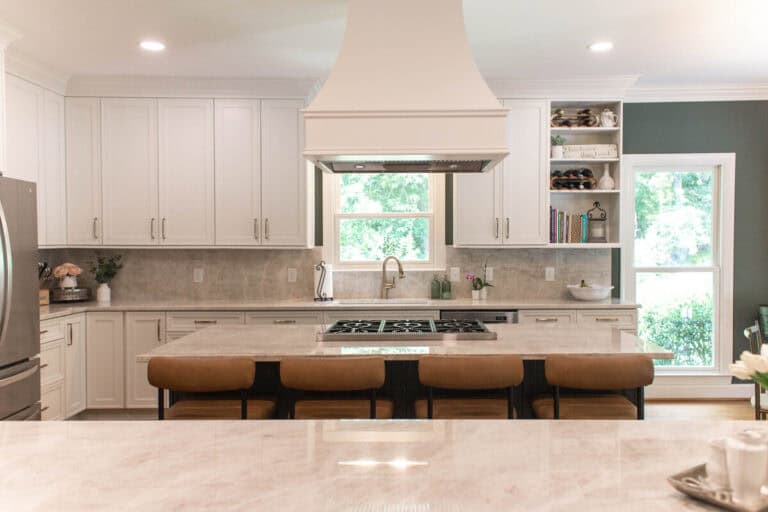
Construction costs in the Birmingham market have increased significantly in recent years, and lead times for skilled trades mean that proper planning needs to happen well in advance of when you want work to begin. A kitchen renovation typically runs over $100,000 in construction costs alone before a single furnishing is purchased, and can go significantly higher depending on the size of the space and the scope of work involved. A primary bathroom renovation typically starts around $60,000 and up, again depending on size, existing conditions, and finish level. Whole-home renovations can run into the hundreds of thousands depending on scope and existing conditions.
What homeowners frequently discover mid-project is that the construction budget consumed more than expected, leaving insufficient resources for the product budget. The result is a beautifully renovated space that sits unfurnished or partially furnished for months or years because the furnishings were never budgeted for separately.
The Budgets People Forget Entirely
Even homeowners who plan carefully for all three budgets above often forget two more that can derail a project’s sense of completion.
Styling, art, and finishing. Even when a product budget exists, it is often scoped around the major pieces, the sofa, the dining table, the primary bedroom furniture, and does not fully account for the styling and finishing layer that makes a space feel complete. Art, accessories, throw pillows, lamps, books, plants, and the dozens of small objects that give a designed room its personality and warmth. These add up more than most people expect, and skipping them is the difference between a room that looks truly designed and one that looks like a furniture showroom.
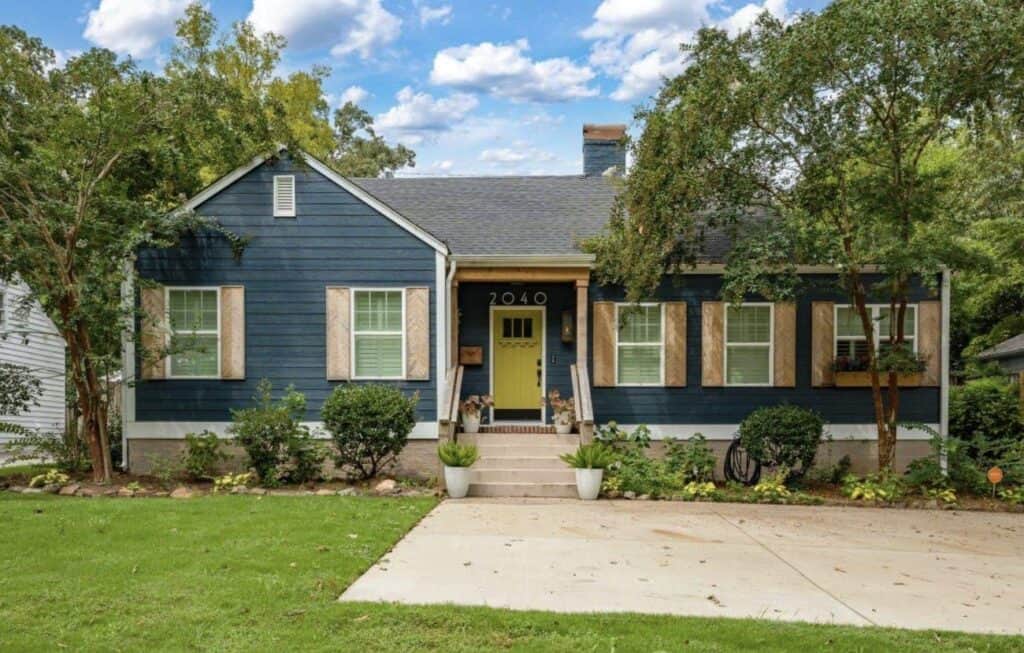
Landscaping, curb appeal, and outdoor living. This is the most consistently forgotten budget in residential design, and it is the one that most visibly signals to the world, and to potential buyers, that a home is finished or unfinished.
A beautifully renovated home with overgrown landscaping, a dated front door, and a bare backyard never looks quite done. And yet the outdoor budget is almost always the last thing clients plan for and the first thing that gets cut when the interior numbers come in higher than expected.
Landscaping, exterior paint, driveway updates, outdoor furniture, lighting, and garden design are not afterthoughts. They are a meaningful part of what makes a home feel complete from every angle, inside and out. For homeowners who are also thinking about eventual resale, curb appeal is one of the highest-returning investments you can make and one of the first things buyers notice before they ever walk through the front door.
Building a realistic outdoor budget alongside your interior budgets from the very beginning means you end up with a finished home rather than a beautifully designed interior surrounded by an unfinished exterior. When you account for all of these pieces together, the design fee, the product, the construction, the styling and art, and the outdoor spaces, you are not just budgeting for a renovation. You are investing in the full package of a beautifully curated home that feels complete from every angle.
What Drives Costs Up and What Brings Them Down
What tends to drive costs higher: Custom and made-to-order pieces, which offer the best fit and finish but carry longer lead times and higher price points than ready-made alternatives. Renovation scope that uncovers hidden conditions once walls open up, deferred maintenance, outdated systems, or structural surprises that require additional work. Complex coordination across multiple trades. Compressed timelines that require rush fees from vendors or contractors. And highly personalized design choices that require extensive custom fabrication.
What tends to bring costs down: A clearly defined and realistic scope established before the project begins. Prompt decision-making that prevents re-selection costs when items go out of stock during delays. A combination of trade and retail sourcing that allocates trade resources where they have the most impact. Proper planning that reduces surprises during construction. And honest budget conversations at the start that allow the scope to be calibrated to what is actually available rather than what would be ideal.
How to Set a Realistic Budget Before You Reach Out
Start with comparable projects. If you know someone who has done a similar renovation in Birmingham, what did it actually cost? Online estimates are national averages that may or may not reflect local market conditions. Real project costs from people you know in similar homes are more reliable data points.
Talk to a contractor before you talk to a designer. For any project involving construction work, getting a rough contractor estimate before the design process begins gives you a realistic construction budget to plan around rather than one you are guessing at. If you do not yet have a contractor you trust, that is not a reason to delay. I have established relationships with great contractors in the Birmingham area and am happy to send you in the right direction before the planning process even begins.
Plan for contingency. Build a ten to fifteen percent contingency into every budget category. Construction projects almost always surface something unexpected once walls open up. Furniture lead times and logistics can be unpredictable and fluctuate more than anyone would like, thanks in part to tariffs and ongoing supply chain variability. Having a contingency is not pessimism, it is planning.
Separate your budgets. Write down three numbers before your first designer conversation: what you are comfortable spending on design fees, what you have available for furnishings and product, and what your construction budget is if applicable. Then add a fourth line for landscaping and exterior. Having those numbers separately before the conversation makes everything that follows more productive.
A Note on Value Versus Cost
Cost and value are not the same thing, and it is worth holding both in mind when you are thinking about what to invest in a design project.
The cost of getting it wrong, buying pieces that do not work together, making renovation decisions you regret, managing a project yourself that spirals in timeline and budget, is frequently higher than the cost of doing it right with professional support from the beginning. Mistake prevention, trade access, procurement management, and the expertise to make decisions that serve both your lifestyle and your long-term investment are all part of what you are paying for.
For Birmingham homeowners who are also thinking about eventual resale, the decisions made during a design project have a direct impact on your home’s value and marketability. Having a designer who is also a licensed realtor in the room means every investment decision is evaluated through both a design and a real estate lens, so you are never over-improving for your market or leaving value on the table.
Ready to Talk Through the Numbers for Your Project?
The most useful conversation you can have before you start is an honest one about what your project actually requires and what it will realistically cost. That is exactly what the discovery call and paid consultation are designed to provide.
You walk away with a clear picture of your scope, a realistic sense of what the investment looks like across all three budgets, and a proposal that reflects what is actually achievable for your home and your goals.
Kristen McGee is an NCIDQ-certified interior designer and licensed realtor serving Birmingham and beyond.