

Working with an interior designer in Birmingham is one of the most significant investments a homeowner can make in their home, and one of the least understood. Most people go into it with a general sense that it involves picking out furniture and choosing paint colors, and come out the other side realizing it was something far more substantial and far more valuable than that.
This guide covers everything. What interior designers actually do, the different ways to work with one, how the process unfolds from start to finish, what it costs, how to find the right fit, and what to expect once a project is underway. If you have been doing your research and want one place that ties it all together, this is it.
What Does an Interior Designer Actually Do?
This is the question almost everyone starts with, and it deserves a clear answer.
An interior designer is not the same as an interior decorator, though the terms get used interchangeably. A decorator typically focuses on the surface layer of a space, furniture, accessories, paint, and finishing touches. A designer works at a fundamentally deeper level, addressing how a space functions, how it flows, and how every element within it relates to the whole.
Full-service interior design encompasses the entire transformation of a space. That means assessing what is not working about the current layout or aesthetic, developing a cohesive concept that addresses those problems, selecting every material and finish and furnishing, sourcing and purchasing on your behalf, coordinating with contractors and tradespeople, managing the project through to installation, and overseeing the final styling.
In short, a designer makes your home work better, and then makes it beautiful. And they do it while managing a level of complexity and coordination that most homeowners significantly underestimate until they try to do it themselves.
What also sets my practice apart specifically is that I am both an NCIDQ-certified interior designer and a licensed realtor. That dual background means I bring real estate context to every design decision, understanding how renovation choices affect resale value, what Birmingham buyers respond to, and when it makes more sense to stay and renovate versus sell and move. It is a perspective most designers simply cannot offer.
The Different Ways to Work with an Interior Designer
Not every project requires the same level of involvement, and not every homeowner wants the same kind of support. Here is a breakdown of the different ways to work with a designer and which situations each one is best suited for.
Full-Service Interior Design is the most comprehensive option. It covers the entire process from initial concept through final installation, with the designer managing every phase. This is the right fit for whole-home renovations, new construction, multi-room projects, and any homeowner who wants the project professionally managed from start to finish without having to own the details themselves.
Designer on Call Retainer is for homeowners who want consistent access to professional guidance without a full-service commitment. Retainers start at 10 hours and are available to both new and returning clients. You draw down hours as you need them for sourcing help, design questions, vendor recommendations, and ongoing decisions as your project unfolds.
Designer for a Day or Designer for a Half Day is a focused, single-session engagement where we spend a defined block of time working through your project together in real time. You leave with clarity, decisions made, and a clear action plan. This is ideal for homeowners who need a burst of expert input to get unstuck, or who want to get oriented before committing to a larger engagement.
Virtual Design offers the same professional expertise and cohesive result as in-person work, delivered remotely. Ideal for clients outside the Birmingham area or local clients who prefer a flexible, remote process. You receive a complete, shoppable design plan you can implement yourself.
Renovate or Relocate Consultation is a specialized service that exists because of my dual background as a designer and realtor. If you are weighing whether to renovate your current home or sell and buy something different, this consultation brings both perspectives to the table in one focused session.
How the Interior Design Process Works, Start to Finish
Understanding the process before you start is one of the most valuable things you can do. Here is how a full-service project unfolds from the first conversation to the final reveal.
Discovery Call. The process starts with a phone or video conversation where we get to know each other, talk through your project at a high level, and figure out whether working together makes sense. No commitment is required.
Paid In-Home Consultation. If the discovery call feels like a good fit, the next step is meeting at your home. I walk through the space with you, ask detailed questions, and develop a genuine understanding of what your project actually requires. This is the foundation of everything that follows. A proposal cannot be scoped accurately without it, and it is why I never write proposals based on phone calls alone.
Proposal. Once the consultation is complete, I put together a formal proposal that outlines the full scope of the project, the design service fee, how purchasing will be handled, and what the overall process will look like. You review it, ask questions, and nothing moves forward until you are confident in every aspect of what you are agreeing to.
Concept Development. With the proposal signed, the creative work begins. Mood boards, space planning, material and finish selections, furniture layouts, and the overall design direction for your space. Every selection is intentional. Nothing is chosen in isolation.
Design Refinement. The concept is presented and then refined based on your feedback. This is a collaborative phase where your input shapes the final direction. By the end of this phase every decision is made and every selection is approved.
Procurement and Project Management. Every item in your project is ordered, tracked, and managed. Lead times are monitored, vendors are coordinated, deliveries are scheduled, and any issues that arise are handled without landing on you. This phase is largely invisible to the client, and that is by design.
Installation and Styling. The final phase. Furniture is placed, art is hung, accessories are styled, and your home comes together as a finished, cohesive space. This is the moment clients walk in and see everything in context for the first time.
How Much Does It Cost to Work with an Interior Designer in Birmingham?
This is the question most homeowners are thinking about from the very first conversation, and it deserves a clear, honest answer even if that answer is more nuanced than a single number.
The investment in working with a designer has two components that are important to understand separately.
The design service fee covers the designer’s time, expertise, and all of the work involved in managing your project from concept through installation. In my practice this is structured as a flat service fee, which means the cost of the creative and management work is defined upfront and separate from the cost of product.
The product budget covers the actual furnishings, materials, fixtures, and finishes that go into your space. This is a separate number and often a significantly larger one. It is also one that homeowners frequently underestimate, and sometimes leave out of their planning entirely along with landscaping, which is one of the most common reasons projects stall, get pushed out, or never reach a finished state.
What drives the investment up or down includes the scope and number of rooms involved, the level of involvement required, whether the project includes renovation or construction work, and the caliber of materials and furnishings being specified.
For a deeper look at how pricing works across different service levels, the cost post covers this in full detail.
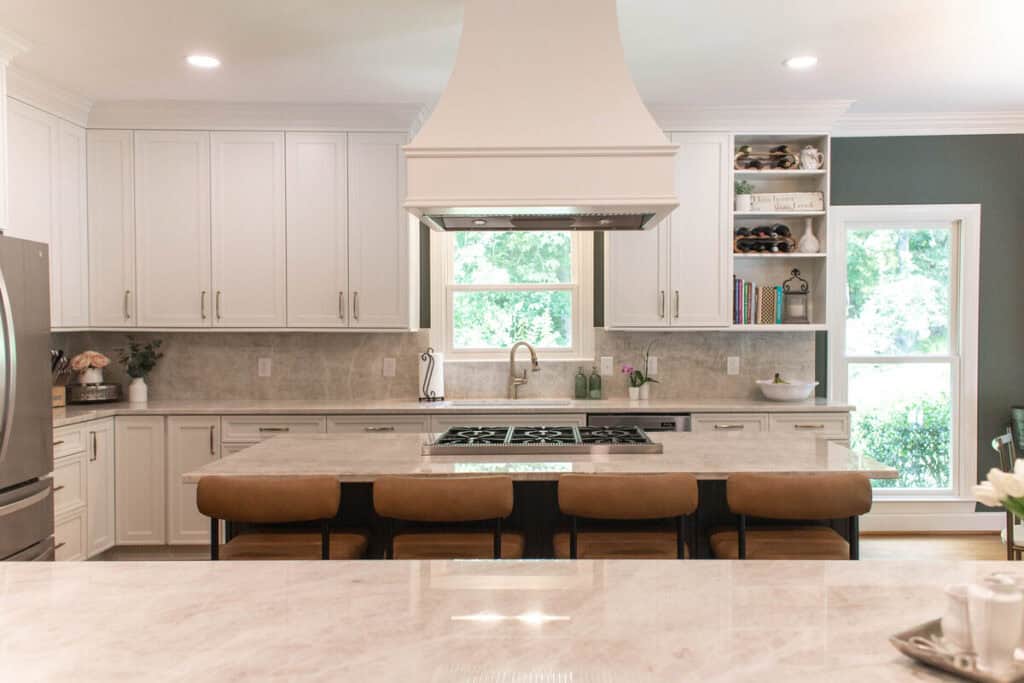
What to Look for When Choosing an Interior Designer in Birmingham
Finding a designer whose work you love is the starting point, not the finish line. The criteria that matter most go well beyond portfolio.
Style range and adaptability. A designer who can work across aesthetics is one who listens to clients rather than imposing their own preferences on every project. Your home should feel like you.
Service scope. Make sure the services a designer offers match what your project actually requires. Not everyone offers full project management and procurement. Not everyone offers virtual services. Knowing what you need before you start evaluating is what makes comparison meaningful.
Process clarity. A designer who can clearly articulate how they work, what each phase involves, what your role is, and how decisions get made is one who has managed enough projects to know what a successful engagement requires. Vagueness in the process conversation usually shows up as friction mid-project.
Local market knowledge. In Birmingham specifically, working with a designer who understands the local market, the neighborhoods, the architectural character of different areas, the vendors and trades worth trusting, matters in ways that are hard to quantify but easy to feel in the finished result.
The relationship. You are going to spend months working closely with this person. Trust your instincts about how a conversation feels. Chemistry and trust are not soft criteria. They are legitimate indicators of how a project will go.
How Sourcing and Procurement Work
One of the most underappreciated parts of working with a designer is what happens after the creative decisions are made.
Designers have access to trade vendors, showrooms, and product lines that are not available to the general public. These professional-grade resources offer broader selection, higher quality, more customization options, and pricing that frequently offsets a meaningful portion of the design fee. That access, and the expertise to use it well, is one of the most tangible financial benefits of hiring a professional.
Procurement is the behind-the-scenes management that follows sourcing decisions. Placing orders, tracking lead times across multiple vendors simultaneously, managing damage claims, rescheduling deliveries when windows shift, and coordinating installation. On a project of meaningful scope this represents dozens of hours of detailed, ongoing work. It simply disappears from your life when it is handled professionally.
It is also worth knowing that there is flexibility in how sourcing is approached depending on your project and budget. Full trade sourcing, a combination of trade and retail, or a fully retail approach with professional guidance are all available options. What makes sense depends on your scope, your timeline, and what level of involvement fits your situation.
What to Expect as a Client
Understanding your role in the process is just as important as understanding the designer’s.
Your most important job is to show up for decisions. The design phase runs on your feedback and approvals. When decisions get delayed, everything downstream gets delayed with them. And when items go out of stock while a decision is sitting, the re-selection process adds both time and additional design fees that are entirely avoidable.
Your second most important job is to be honest, about your budget, your lifestyle, how you actually live in your home, and what you genuinely love versus what you think you should love. A design that is built around who you actually are will serve you far better than one built around an idealized version of your life.
Beyond that, trust the process. The phases exist for good reasons. The planning that happens before anything is ordered is what makes the installation go smoothly. The refinement phase that feels slow is what prevents costly changes mid-procurement. Patience in the early stages is what makes the final result feel effortless.
Frequently Asked Questions About Working with an Interior Designer in Birmingham
How long does a project take? It varies significantly based on scope. A focused single-room furnishing project typically runs three to five months. A multi-room project without major renovation typically runs five to eight months. A renovation project can run six months to over a year. The two biggest variables within your control are how quickly you make decisions and how thoroughly the project is planned before procurement begins.
Do I need to have a budget already figured out? You do not need an exact number, but having a realistic range in mind makes the first conversation much more productive. The more honest you can be about what you are comfortable investing, the better I can tailor the scope and approach to what actually makes sense for you.
Can you work with pieces I already own? Absolutely. Part of good design is editing and integrating what you have rather than starting from scratch unnecessarily. We assess what is worth keeping, what is limiting the design, and what needs to go.
Do you work with contractors? Yes. I have established relationships with trusted contractors and tradespeople in the Birmingham area and am happy to make introductions for the right project. If you already have a contractor on board, the jobsite consultation is a great opportunity to get everyone aligned from the beginning.
Do you offer virtual design services? Yes. Virtual design is available for clients outside the Birmingham area and for local clients who prefer a remote process. You receive a complete design plan with layouts, selections, and a shoppable sourcing list you can implement yourself.
Is there a minimum project size? The right place to start is a discovery call where we can talk through your project and figure out which service level makes the most sense for your scope and goals.
Ready to Get Started?
You have done your research. You know what the process looks like, what to expect from the investment, and what to look for in the right designer. The next step is a conversation specific to your home and your goals.
A discovery call is where that conversation starts. It is low commitment, no pressure, and designed to give both of us a clear picture of whether working together makes sense.
Kristen McGee is an NCIDQ-certified interior designer and licensed realtor serving Birmingham and beyond.